Showing posts with label Other. Show all posts

Sunday, 15 January 2023

Happy 2023!

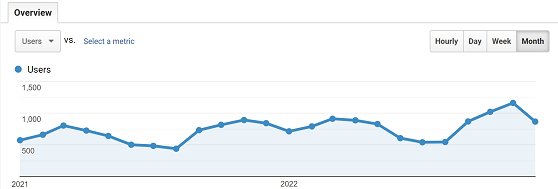
Monthly visitors 2021-22. Page views ~3 each.

My main interests in the past year have not been maths and relativity  and I have not posted here for over a year. However, the website remains fairly popular and occasionally attracts useful and nice comments especially from Petra Axolotl who was my very first mentor back in 2018. So I will continue to pay a tenner a year to keep the website going.

Happy 2023, year of the rabbit.

Monday, 10 January 2022

New Scientist Christmas Puzzle 2021

 
The grid contains 46 x 72 = 3,312 letters. Hidden inside it are the 118 elements in the periodic table, 17 known fundamental particles and 20 amino acids that make up proteins. They are revealed here. TAU and TIN occur about 15 and 31 times respectively. Two TINs come out of row 44, column 30, one going up and left, the other up and right. IRON and MUON occur three times. All other multiple occurrences are necessary if one is to have words such as ERBIUM, TERBIUM, YTTERBIUM. MUON should occur twice, the second time in MUONNEUTRINO.


The original puzzle is here. The spreadsheet and more are here.

Friday, 30 July 2021

Pythagoras's and Newton's formulas for 𝝅

This fun video by Veritasium gives the story of Pythagoras and Newton and ##\pi## but it doesn't go into details. I wanted to know more.

Pythagoras calculated ##\pi## by placing regular n-agons just inside and outside a unit circle and calculating their perimeters. Some examples are shown below.
Apparently he stopped at a 96-agon. I reckon the result he got was$$48\sqrt{2-2\sqrt{\frac{1}{2}+\frac{1}{2}\sqrt{\frac{1}{2}+\frac{1}{4}\sqrt{2+\sqrt3}}}}<\pi<\frac{96\sqrt{2-2\sqrt{\frac{1}{2}+\frac{1}{2}\sqrt{\frac{1}{2}+\frac{1}{4}\sqrt{2+\sqrt3}}}}}{\sqrt{2+2\sqrt{\frac{1}{2}+\frac{1}{2}\sqrt{\frac{1}{2}+\frac{1}{4}\sqrt{2+\sqrt3}}}}}$$It was accurate to four significant digits and not surprisingly he stopped! He didn't even have decimal numbers.

The second last person to use this method in anger was Ludolph van Ceulen in about 1600 who did a ##2^{62}##-agon and still only got 35 decimal places. Apparently it took him 25 years. Nutter.

Then along came Newton (about 1700) and he used calculus (which he had just invented) and the binomial theorem to get$$\pi\approx-\frac{3\sqrt3}{2}+6-\left(\frac{1}{4}+\frac{3}{320}+\frac{45}{53,760}+\frac{1,575}{22,855,680}\right)$$That's accurate to five significant digits and a good deal easier to calculate. The further you go the better it gets:
Here's how they did it Newtons formula for pi.pdf (10 pages).

Wednesday, 13 May 2020

Reciprocals of prime numbers

On a program about Gauss (BBC In Our Time), near 48:00, they said that the reciprocal of a prime number can be a recurring decimal and the maximum length of the recurring part is one less than the number. My curiosity was aroused.

Examples are
1/7=0.142857142857142857142857142857142857...
1/59=0.01694915254237288135593220338983050847457627118644067796610169491525423728813559322033898305084745762711864406779661...
the latter was found by a VBA program which could theoretically go to 2 billion digits because that is the maximum size of an array and length of a string. However it would run out of time or memory well before it got there. Calculation the reciprocals of the numbers from 80,000-89,999 and putting them into an Excel spreadsheet found 316 reciprocals which had recurring digits one less than the number you first thought of in 7 hours 50 minutes. 89,989 is prime 1/89,989 has 89,988 recurring digits and the VBA program  took 44 seconds just to calculate that. A different programming language would be much faster.

I now have a list (in several spreadsheets) of all the reciprocals from 2 to 999,999. It is fascinating.

A 'number whose reciprocal has recurring digits one less than the number' is a bit of a mouthful, so I abbreviate it to an ##R_-## ('R minus') number. It is also useful to define a function ##R\left(n\right)## which gives the number of Recurring digits in ##n##. The VBA program calculates ##R\left(n\right)##. For ##R_-## numbers, ##R\left(n\right)=n-1## . A related function is ##U\left(n\right)## which is the number of non-recurring digits, or Unique digits, in the reciprocal. So for example we have
##R\left(7\right)=6,\ U\left(7\right)=0## and
##\frac{1}{22}=0.0454545\ldots\ \ ,\ \ R\left(22\right)=2,\ U\left(22\right)=1##

The scatter chart contains a point at ##n,R\left(n\right)## for every number from 2 to 9,999.

Given positive integers ##m,n,p## greater than 0 or 1, I have proved that
1) ##R\left(n\right)<n## for all ##n##. This is shown by the graph. There are no data points above the main diagonal line which has gradient ##~1##.

2) ##R\left(n\right)=n-1## only for prime numbers. Or only prime numbers are ##R_-## numbers.

3) ##R_-## numbers occur about 2.6 times less often than prime numbers as shown by the density of the main diagonal line.

4) For multiples of ##R_-## numbers ##n## , ##R\left(m\times n\right)## is likely to be ##R\left(n\right)##. These are shown by the less dense diagonal straight lines which have gradients 1/2, 1/3, 1/5 ....

5) ##U\left(p\times2^m\times5^n\right)=m\ or\ n## whichever is larger of ##m,n##. (We can have ##m,n=0## in this case and ##p## must not have 2 or 5 as a factor.)

6) A consequence of 5 is that two fifths of consecutive numbers have ##Q\left(n\right)=0##.

7) Another consequence of 5 is that all prime numbers, except 2 and 5, and therefore all ##R_-## numbers have no non-recurring digits.

The first two have mathematical proofs, the rest are really conjectures based on experiments with lots of numbers. The mathematical proofs are algorithmic: One thinks of how to do the calculation and that proves the result.

Here's why Reciprocals of prime numbers.pdf (11 pages)

On Gauss and me

Carl Friedrich Gauss
On the program they mention the famous story about Gauss when he was age 10 at elementary school adding up all the numbers from 1 to 100. His class was asked to do this by the teacher who, no doubt, thought she could have some quiet time while the class was busy. Gauss added the numbers up in a minute, foiling the teacher's plan. Apparently Gauss used to love telling this story.

When I was about 10 or 11 and day dreaming at school assembly, I worked out a formula for the sum of the first ##n## numbers. It is of course ##\Sigma=n(n+1)/2##. I thought I had made an fantastic mathematical and nervously went to tell Mr Fillingham, head maths teacher. He gave me a strange look and showed me the general formulas for arithmetic and geometric progressions. I was crestfallen and never repeated the story.

Gauss was given a book of logarithm tables when he was 15 and it had a list of prime numbers in the back. He said that there was poetry in the tables.

He spent so much time day dreaming about mathematics that he memorised his times tables up to very large numbers. He would have loved computers. They give you the power to play with very large sets of numbers.
Friday, 10 April 2020

2 years on


Two years on and I am about half way through Spacetime and Geometry : An Introduction to General Relativity – by Sean M Carroll. It's probably the best value for money book I have read (er... studied) in my life. When I started I could barely remember how to differentiate. Now I can use the chain rule almost without thinking and the tensor things which I had never met before are a doddle. I am now on the Eddington-Finkelstein metric and discovering how to get into a black hole (which seems to be impossible in the obvious ##t,r,\theta,\phi## coordinates) and why you never get out. I can't praise the book and Sean Carroll highly enough!

Monday, 3 June 2019

Windows Defender and Google Drive

Windows Defender and Google Drive (Backup and Sync) seem to be incompatible. When you get a new Windows computer Windows Defender is preinstalled. If you then install Google Backup and Sync it copies all the your Google Drive data onto the new computer but after that synchronisation does not work. You may not notice this! You will notice that there is a Windows Defender pop up menu in File Explorer, but no Google Drive pop up menu. New files and folders that you create in your Google Drive folder are not created in your Google cloud. Updates and deletions are not propagated.

I do not know why this is. Perhaps it's because Microsoft want you to use OneDrive which is their version of Google Drive.

The solution

The solution is very simple: Replace Windows Defender by Avira which is highly recommended free anti-virus software.  (Other anti-virus software may also work).

1. Stop Google Backup and Sync(see below under Read more)
2. Disable Windows Defender in Windows settings. Their are good instructions here.
3. Install Avira.
4. Restart Google Backup and Sync(see below under Read more)
Google Backup and Sync then resyncs your data (which might take a while) and the useful file / folder icons and the Google Drive pop up menu reappear in File Explorer.

I am not even sure that steps 1 and 4 are necessary.

I could not find this very important information about Google Drive and Windows Defender anywhere on the web nor did Google Drive email help (googleone-support@google.com) seem to be aware of it. Many solutions, including those from Google help, suggest deleting all the files in your Google drive folder(s), reinstalling Drive and resyncing from the web. This would be a huge waste of time. Google help suggested doing that twice!

https://windowsreport.com/google-drive-wont-sync-windows-10/ claims to answer the question: "How to fix broken sync with Google Drive in Windows 10". It gives seven solutions. The first suggests reinstalling Google Drive and recopying all your data. That might take days and why would it work at the end? The second invites you to turn off virus protection! Very stupid. Solution 3 is "Install the previous version of Google Drive". Why would that work? The drivel continues.

I was so pleased with Avira (I have used the free version before) that I decided to buy it. It seemed to be 9.95€ which was very fair. But then it turned out to be 9.95€ per month. I cancelled the subscription and will continue with the free version.

Friday, 31 May 2019

When is a point inside a quadrilateral?

This all started because I am playing with four sided tiles (quadrilaterals) and needed to know if a point is inside one of the quadrilaterals. There are two basic shapes: kites and darts which you can see below. I got the (incorrect) answer, but not the proof, by searching on that web. There are other solutions which might be more reliable, but this one is good enough for my needs. There are some videos at the bottom of the post.

Kites

First we look at kites, quadrilaterals all of whose internal angles are less than 180°.

We show three situations with a point P inside (middle) or outside a kite. When P is inside, clearly the four angles add to 360°. If P is outside the tile then one of the angles will be the largest but less than 180° and the other three will add up to be the same as it, also less than 180°. So the total is less than 360°. For a kite this is an infallible test to see if a point is inside it or outside it.

Note: The four angles are always ∠APB, ∠BPC, ∠CPD, ∠APD and they are always measured the 'small' way so that they are less than 180°.

Darts

Sadly this is not an infallible test for dart shaped quadrilaterals when one internal angle is greater that 180° as we see in the three examples below:


Once we get further inside a dart things work better as can be illustrated by the graph below. We have a downward pointing dart (slightly exaggerated) and a horizontal yellow line passing through it. There are four points shown on the line: ##P_1,P_2,P_3,P_4##. A point on the green line shows the total angle (in radians) from the point above it on the yellow line to the four vertices. So
The first point which is outside the dart is ##P_1,total<2π ##
The second which is on the edge of the dart is ##P_2,total=2π ##
The third which is inside the dart is ##P_3,total=2π  ##
The fourth which is on another edge of the dart is ##P_4,=2π   ##

We can easily draw more graphs with the yellow line at different levels:

Our test would say that points inside the wing tips of the dart were not inside it.

For a kite the behaviour is much better:
These are all plotted and animated in Penrose Tile Plotter.xlsm. And here are the videos which demonstrate the limited but adequate validity of the method!

It is instructive to pause the videos at interesting points. The point P and the dashed lines to the vertices are there for illustrative purposes. The yellow and green lines are the important ones.


Monday, 31 December 2018

New source of answers from University of Utah

After finishing Exercise 2.07 I searched for other solutions and found on at the University of Utah for a course by Pearl Sandick in Spring 2018. They were using the book as their textbook. The home page for the course is here: http://www.physics.utah.edu/~sandick/7720spring2018/index.html. As ever I have saved the solutions in case they get deleted. I have catalogued the answers on the Answers to Exercises page.

I am glad to say that my answers to the exercise were correct.

Thursday, 6 September 2018

Conformal Cyclic Cosmology (CCC)

An article in New Scientist (here) attracted my attention to Conformal Cyclic Cosmology (CCC) which sounds very interesting. The article presents some evidence for CCC. In the magazine the title was "A glimpse of a previous universe". I have a copy of it.